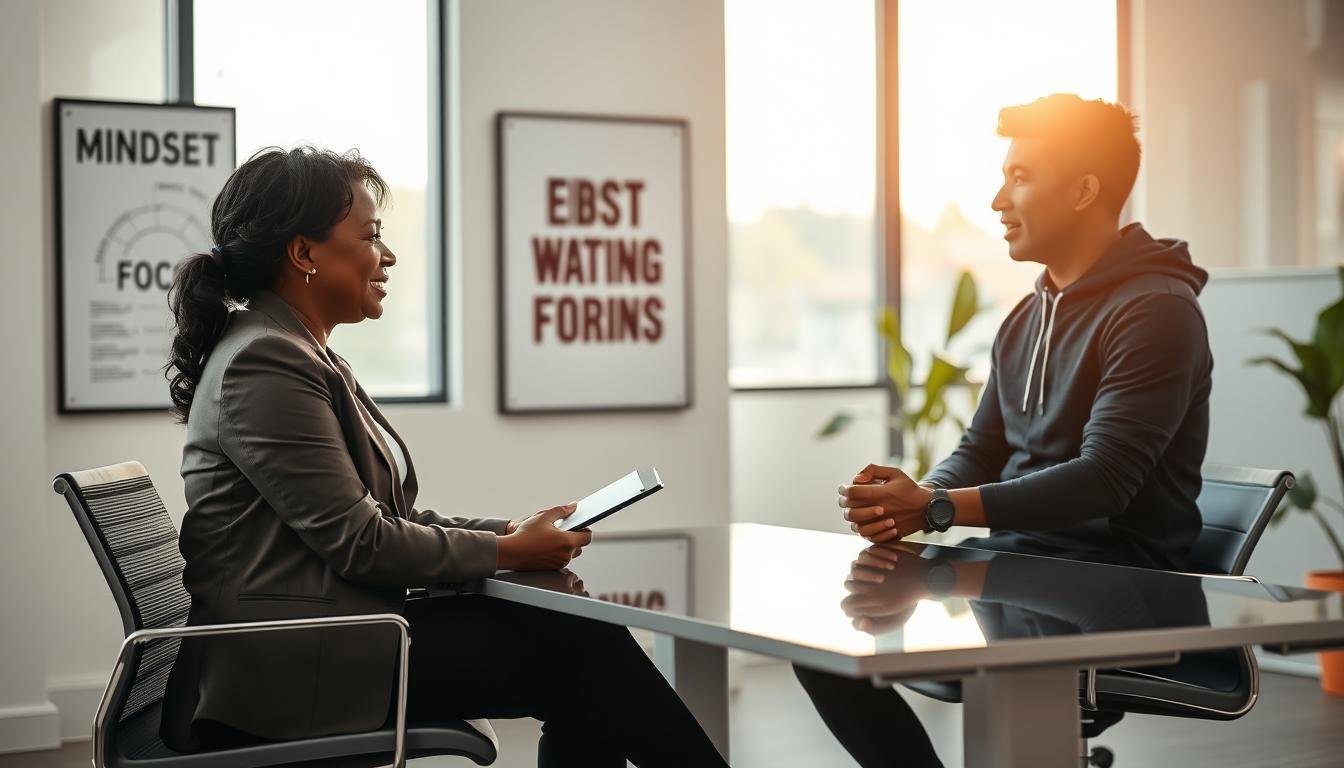
What is Sports Psychology
We introduce a practical view of mental training for athletes and everyday exercisers. In this guide, we define the term and explain why the mental game often separates practice success from pressure performance.
At its core, sports psychology examines how mental factors such as focus, anxiety, motivation, and resilience shape performance. We treat this subject as a usable skill set that athletes can train alongside strength and skill work.
We also highlight that the field studies exercise adherence and well-being, not just winning. Readers will see evidence-based methods, career paths, and real U.S. examples that apply to amateurs and pros alike.
Expect practical themes: focus drills, anxiety control, confidence building, injury recovery, and team communication. Our aim is to make mental skills clear, actionable, and relevant for your routine.
Sports psychology explained: the mental side of athletic performance
This section breaks down the mental side of training into clear, usable concepts. We define sport psychology in plain English and show how it ties to measurable outcomes.
A practical definition and applied focus
Sport psychology studies how thoughts, attention, and emotion affect athletic performance. The applied branch, often called sports performance psychology, targets repeatable gains in competition.
- We distinguish basic study from applied work that measures gains in practice and games.
- Key psychological factors include attention, stress, confidence, and motivation.
- Practitioners teach skills like goal setting, imagery, and self-talk to boost performance.
Linking performance to health and practice
Exercise improves mood, lowers stress, and supports long-term well-being. That link makes this field useful beyond medals or stats.
Licensed psychologists may treat clinical issues while also coaching mental skills for sport. We use this guide to move from core concepts to routines, coping tools, and decision-making under pressure.
Why sports psychology matters in modern sports culture
Modern teams and trainers now treat mental training as a performance core rather than a fringe add-on. When physical skills level out, mental skills often decide outcomes. We want readers to see how focus work, confidence building, and motivation plans lead to more consistent results under pressure.
Performance benefits: focus, confidence, motivation, and resilience
Focus training and imagery sharpen attention in noisy settings. Simple routines and cue words help athletes stay present and avoid overthinking.
Confidence strategies—goal progress checks and positive self-talk—reduce hesitation. Motivation plans, including short process goals, keep daily work meaningful.
Well-being benefits: stress reduction and long-term mental health
Relaxation practices and breathing drills lower stress and improve mood. Regular exercise also supports brain health and reduces disease risk over time.
Where it shows up today: pro teams, colleges, and everyday fitness
- Pro leagues and Olympic programs employ mental skills coaches.
- Many NCAA teams integrate routine mental training into practice.
- Fitness clubs use motivation strategies to help athletes and non-athletes stick with programs.
| Area | Primary Benefit | Typical Method |
|---|---|---|
| Competition | Boosts focus and resilience under pressure | Pre-performance routines, visualization |
| Training | Improves consistency and motivation | Process goals, feedback loops |
| Wellness | Reduces stress and supports mental health | Breathing exercises, relaxation |
Who sports psychology helps, from elite athletes to weekend warriors
Across levels, we coach simple habits that help athletes perform better and enjoy training more.
Competitive athletes and Olympians face public pressure, selection decisions, and high stakes. We teach pre-performance cues, routines, and coping tools so decision-making stays clear during key moments.
Youth athletes gain when mental skills arrive early. Teaching focus, confidence, and coping makes play feel fun and lowers dropout. Research shows benefits across ages, including young gymnasts aged 8–13.
Non-athletes also use sport psychology to build consistency. We help people set realistic goals, create enjoyable routines, and manage setbacks so exercise becomes sustainable and better for long-term health.

- Performance: reduce anxiety and sharpen attention before competition.
- Development: build confidence and motivation for youth practice.
- Everyday: form habits that make regular exercise stick.
| Group | Main Need | Typical Support |
|---|---|---|
| Elite athletes | Handle pressure | Pre-game routines, visualization |
| Youth | Enjoyment and retention | Confidence drills, simple coping |
| Recreational | Consistency and health | Goal setting, habit design |
What is Sports Psychology in real-world practice
Applied mental skills appear as short drills and simple routines that fit alongside physical practice.
We assess performance barriers, set clear skill-building plans, and track follow-through across training weeks. Sports psychologists teach imagery, goal setting, and self-talk to improve performance and manage pressure.
How athletes use it
Athletes use imagery to rehearse plays and use cue words to halt panic or perfectionism. Athletes use brief focus drills to sharpen concentration for pre-game and in-game moments.
How coaches and teams gain
Coaches gain clearer feedback methods and steadier preparation routines. The team benefits when mental skills become shared language, so pressure moments are handled consistently.
- Assessment of barriers, then weekly skill plans
- Drills that sit inside normal practice, not separate homework
- Session examples: pre-performance routines, confidence drills, competition debriefs
| Role | Main Focus | Outcome |
|---|---|---|
| Sports psychologists | Skill teaching | Better focus |
| Coaches | Communication | Stable routines |
| Team | Cohesion | Consistent responses |
We design this work to fit training flow and to help athletes translate mental tools into daily habits.
A quick history of sports psychology in the United States and beyond
We map how early experiments grew into a formal academic and professional field over decades.
Early roots: the first lab and a young discipline
The first research lab devoted to mental performance opened in 1925. That early work showed promise, but the first U.S. lab closed in the early 1930s.
For decades the topic remained scattered across smaller studies rather than a steady academic track. That history helps explain why the field is still described as relatively young.
Growth milestones and modern consolidation
Research revived in the late 1960s in the U.S. The International Society of Sport Psychology (ISSP) formed in 1965 and acted like a formal psychological association for the area.
By the 1970s universities offered courses and new degree paths. The 1980s brought more rigorous research methods, testing performance enhancement and exercise effects on mood and stress.
- 1925: first lab
- Early 1930s: U.S. closure
- Late 1960s: American research revival
- 1965: ISSP founded
- 1970s–1980s: university programs and stronger research
| Era | Focus | Outcome |
|---|---|---|
| 1920s–30s | Exploratory study | Early findings, limited growth |
| 1960s–70s | Organizing research | Courses and trained professionals |
| 1980s | Rigorous methods | Evidence-based best practices |
The biggest psychological factors that shape performance
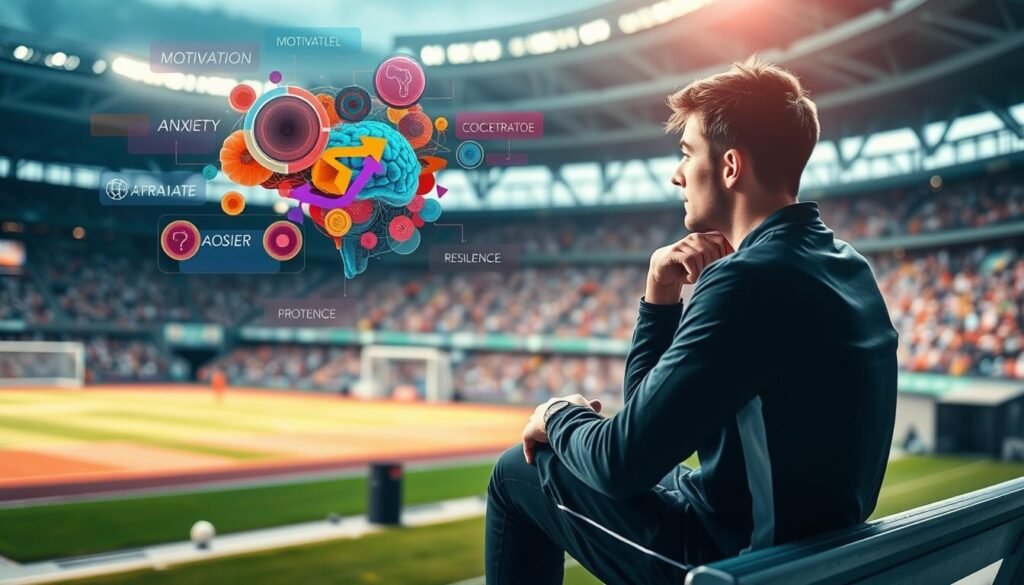
We outline the core psychological factors that most influence outcomes and explain how they show up across different levels of sport.
Attentional focus
Focus is a trainable skill. Athletes learn to tune out crowds, media, and internal doubt and return to task cues after mistakes.
In precision sports, steady attention matters for every rep. Endurance athletes use focus to manage pacing and fatigue. Team players shift focus between role tasks and game flow.
Stress and anxiety across the timeline
Stress and anxiety appear before, during, and after competition. Pre-event nerves can tighten muscles. In-game anxiety may disrupt decision-making.
Rumination after results affects future training unless athletes use coping tactics like short debriefs or relaxation drills.
Confidence, self-efficacy, and mental toughness
Confidence reflects what an athlete believes they can do under pressure. Self-efficacy shapes choices and risk-taking in competition.
Mental toughness looks like calm under pressure, quick bounce-back from setbacks, and steady commitment to practice.
Motivation: intrinsic vs extrinsic
Intrinsic drive—internal pride or mastery—supports long-term adherence. Extrinsic rewards—trophies or recognition—can boost short-term effort but may harm consistency if they eclipse internal goals.
Pressure, expectations, and identity
When identity ties tightly to results, swings in outcome threaten mental health. We teach athletes to separate self-worth from a single performance and to adopt process-focused identity cues.
| Factor | How it shows up | Typical intervention |
|---|---|---|
| Focus | Distraction by crowd or noise | Routine cues, attention drills |
| Stress/anxiety | Nerves before or during events | Breathing, brief imagery |
| Motivation | Drive to train vs reward chasing | Goal setting, value checks |
Types of sports psychologists and related professionals
Choosing the right helper starts with knowing how educational, clinical, and exercise-focused experts differ. We outline each role and when to reach out.
Educational mental skills coaches
Educational sports psychologists teach performance tools like imagery, goal setting, and self-talk. They focus on routines that boost consistency and competition readiness.
Clinical providers for deeper concerns
Clinical psychologists support anxiety, depression, eating disorders, and substance issues while integrating sport methods. They work on mental health and performance together.
Exercise-focused psychologists for everyday routines
Exercise psychologists help non-athletes build lasting workout habits, enjoyment, and adherence. They aim for consistent activity and better overall health rather than medals.
Psychologist versus psychiatrist: prescribing and training
A sports psychologist cannot prescribe medication unless they hold a medical degree. When prescription or complex psychiatric care is needed, a sports psychiatrist or physician-led team steps in. Check each provider’s degree and licensure when you choose care.
- Performance slump → educational mental skills coach
- Panic before events or ongoing anxiety → clinical psychologist
- Burnout or trouble keeping routines → exercise psychologist
- Medication questions → psychiatrist consult
| Role | Main focus | Typical training |
|---|---|---|
| Educational | Skills for competition | Applied psychology training |
| Clinical | Mental health + performance | Clinical degree, therapy credentials |
| Exercise | Routine and adherence | Behavioral and exercise science |
Core sports psychology techniques athletes use to improve performance
We present a compact toolkit of techniques athletes use to turn practice into reliable results. These methods work best when trained regularly, not only on game day.
Goal setting that works
We use three goal types: outcome, performance, and process. Outcome goals focus on end results, performance goals target measurable standards, and process goals describe daily actions.
Good goals are specific, measurable, attainable, time-based, and challenging. This keeps progress visible and motivation steady.
Imagery and multisensory rehearsal
Imagery trains the brain by rehearsing sight, sound, and touch. Athletes visualize movement, crowd noise, and feel to boost execution.
Self-talk for focus and confidence
We teach self-talk that replaces vague criticism with short cue words. This reduces stress and builds steady confidence during key moments.
Pre-performance routines
Routines create predictability. Simple warm-up sequences, cue words, or a piece of music reduce nerves and center attention.
Arousal regulation and optimal levels
Each athlete has an optimal activation zone. We use breathing, mindfulness, music, or progressive relaxation to calm or energize as needed.
| Technique | Main Action | Benefit |
|---|---|---|
| Goal setting | Set outcome, performance, process goals | Clear progress, steady motivation |
| Imagery | Rehearse with multiple senses | Sharper execution under pressure |
| Self-talk | Use cue words and reframes | Lower stress, higher confidence |
| Arousal regulation | Breathing, music, relaxation | Optimal activation levels |
Relaxation and mindfulness skills for calmer, more consistent competition
We present practical relaxation tools that directly improve concentration, decision speed, and muscle tension. These techniques belong in daily training, not just before big events.
Progressive muscle relaxation for anxiety control and concentration
Progressive muscle relaxation alternates tensing and releasing major muscle groups. The simple step is tense → hold → release; repeat from feet to face.
This method lowers anxiety and stress, and helps athletes reset after a mistake or before a clutch moment.
Breathing and mindfulness meditation to stay in the moment
Controlled breathing and short mindfulness meditations bring attention back to the present. Athletes use breath cues between plays to stop rumination and sharpen focus.
Short daily practice builds the reflex to return to task, which improves in-game performance over time.
Hypnosis in sport: focused attention and suggestibility for performance
Hypnosis involves focused attention and increased suggestibility and has aided players in basketball, golf, and soccer. It is not magic but a targeted way to reinforce helpful cues and routines.
We recommend it as an adjunct for some athletes, used with trained providers and consistent follow-up work.
- Pair brief mindfulness with warm-ups to make calm automatic.
- Use breathing between efforts to control arousal and recover faster.
- Train short daily blocks—consistency beats occasional, long sessions.
| Technique | How it works | Best use |
|---|---|---|
| Progressive muscle relaxation | Tense → hold → release to reduce muscle tension and anxiety | Pre-game routines; post-error reset |
| Breathing & mindfulness | Regulates arousal and anchors attention to the present | Between plays; daily short practice |
| Hypnosis | Focused attention plus suggestion to reinforce cues | Targeted performance goals with a trained provider |
Evidence-backed approaches for anxiety, stress, and burnout
Evidence guides our choices when anxiety, stress, or burnout start to interfere with training, sleep, or relationships. We prefer methods with clear trial data and practical steps athletes can use daily.
Cognitive behavioral therapy to change unhelpful thoughts
CBT helps athletes spot automatic thoughts like “I always choke,” test them, and replace them with action plans. We teach simple experiments: record a thought, test the evidence, then rehearse an alternative cue and behavior.
Case research shows CBT reduced performance anxiety in a 17-year-old cross-country skier and improved emotional well-being in injured NCAA Division I athletes during recovery.
Biofeedback and heart-rate variability training
Biofeedback teaches recognition of bodily stress signals and gives real-time feedback to train regulation. HRV training uses breathing and pacing to shift autonomic balance.
One systematic review found HRV biofeedback improved sports performance in over 85% of studies and lowered stress and anxiety levels.
Burnout prevention: balance, recovery, and renewed motivation
We define burnout as emotional exhaustion, reduced accomplishment, and sport devaluation. Prevention focuses on realistic loads, planned rest, and practices that restore motivation.
- Design training with built-in recovery weeks.
- Use psychological recovery: relaxation, values work, and variety in tasks.
- Set boundaries around practice to protect sleep and relationships.
| Approach | Primary benefit | Typical use |
|---|---|---|
| Cognitive behavioral therapy | Changes unhelpful thoughts and behaviors | Performance anxiety, injury recovery |
| HRV biofeedback | Improved autonomic regulation | Pre-competition regulation; daily stress training |
| Burnout prevention | Restored motivation and reduced exhaustion | Training design, planned rest, psychological recovery |
Injury recovery and rehabilitation: the mental side of coming back strong
Recovery after injury demands mental strategies that match the physical work of rehab. We address common feelings, practical goal setting, and staged confidence work so athletes return safely and ready to perform.
Common emotional responses
An injury often upends identity and routine. Fear about re-injury, frustration at slow progress, anger about lost roles, and moments of hopelessness are normal.
These feelings can ebb and flow across short- and long-term rehab. We normalize that swings and encourage early mental health checks when distress persists.
Rehab goal setting and rebuilding confidence
We set staged goals: short rehab targets, medium mobility goals, and a clear return-to-play goal. Goal setting keeps progress measurable and guards against “all-or-nothing” thinking.
Confidence rebuilding follows stages. Early reps focus on trust and safe movement. Later work tolerates uncertainty and tests game-like demands to restore full confidence.
- Use mental rehearsal and task-focused self-talk to support movement quality.
- Coordinate messages from medical staff, coaches, and athlete to reduce mixed signals.
- Protect mental health with routine, social support, and achievable rehab tasks.
| Phase | Main focus | Psychological task |
|---|---|---|
| Acute | Pain control & early rehabilitation | Normalize emotion; set small daily goals |
| Progression | Strength, mobility, skill rebuilding | Mental rehearsal; graded exposure to sport tasks |
| Return | Full practice and competition prep | Trust building; uncertainty tolerance |
Team building, leadership, and communication in competitive environments
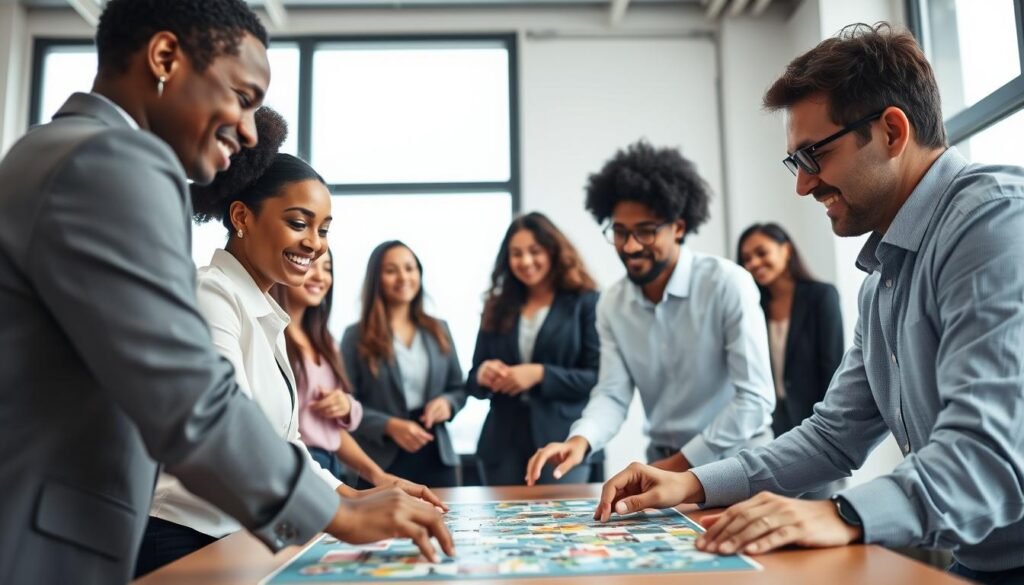
Strong team bonds change how groups handle stress and late-game confusion. We focus on practical steps that make communication clearer and roles reliable so performance stays steady when pressure rises.
Creating cohesion and trust across different roles
Cohesion shows up as clear roles, predictable standards, and fast resets after mistakes. Teams that practice role clarity spend less time arguing and more time executing.
We train simple rituals: opening check-ins, role calls before play, and agreed reset phrases to stop blame spirals and rebuild trust quickly.
Partnering with coaches on motivation, feedback, and culture
Coaches and psychologists often work together to align training messages with team values. That partnership keeps standards consistent from practice to competition.
We run feedback loops that teach coaches to give specific, actionable praise and to hold accountability talks that repair conflict rather than widen it.
Managing distractions like crowds, media, and high-profile pressure
Distractions such as fans, travel fatigue, and public scrutiny can erode focus quickly. We teach short, portable routines—breath cues, shared pre-game signals, and communication scripts—that protect attention under noise.
Teams rehearse media tasks and travel disruptions so the same mental skills that aid competition also reduce stress off the field.
| Role | Main focus | Example method |
|---|---|---|
| Team | Trust & role clarity | Pre-game role call; reset cue |
| Coaches | Feedback & culture | Structured praise; accountability scripts |
| Psychologists | Attention & pressure coping | Focus drills; media rehearsal |
How we can apply sports psychology outside sports
We show how athlete-style mental tools help any high-pressure field perform better and protect health. These habits give a clear playbook for quick recovery after mistakes and steady focus during intense tasks.
Using athlete-style routines to improve performance in high-stress professions
Simple pre-performance routines, breathing resets, short self-talk cues, and attention control translate into better decisions in medicine, business, and the military.
A study reported that doctors who used athlete-style routines controlled negative reactions and improved patient care. That shows the tools work beyond gyms and games.
Supporting healthy weight and long-term activity through enjoyment and motivation
We link motivation science to public health: when movement is enjoyable and autonomous, people keep it up. That habit-building supports healthy weight over time, especially in children.
Sport psychology methods that boost fun and choice can reduce obesity risk by raising daily activity and adherence.
- Transferable tools: routines, breathing, cue words, attention drills.
- Practical idea: build 8–12 week “training cycles” for life goals, with process goals and small consistency metrics.
- Measure progress by habits kept, not perfection; review weekly and adjust cues.
| Setting | Common tool | Primary benefit |
|---|---|---|
| Healthcare | Pre-task routine + breathing | Better composure; improved patient care |
| Workplaces | Short imagery; cue words | Faster recovery after errors |
| Public health | Enjoyment-focused activity plans | Higher long-term physical activity; healthier weight |
How to become a sports psychologist in the United States
We lay out a clear U.S. pathway for building a career working with athletes and teams.
Degrees and coursework commonly required
Most professionals hold a master’s or doctorate in clinical, counseling, or sport psychology. Undergraduate study should include psychology and supplemental classes in kinesiology, physiology, and sports medicine to understand athlete bodies.
Supervised practice, licensure, and common certifications
Licensure usually requires supervised practice under a licensed psychologist plus exam completion. The Association for Applied Sport Psychology offers the CMPC credential for applied work.
Specializations and typical work settings
Options include applied consultants, academic researchers, and clinical providers who treat mental health while supporting performance. Common workplaces are teams, universities, private practice, clinics, and human performance institutes.
- Stepwise path: undergrad → graduate degree → supervised hours → licensure/credentials.
- Cross-disciplinary courses help bridge study and on-field demands.
- Credentials like CMPC signal applied competence to employers and clients.
| Specialization | Typical setting | APA salary range |
|---|---|---|
| Applied | Teams, institutes | $60,000–$80,000 (dept.) |
| Academic | Universities, research | $60,000–$80,000 |
| Clinical | Clinics, private practice | Private practice can exceed $100,000 |
Putting sports psychology to work for your next season or training cycle
Let’s finish with a short, practical plan you can use the next 2–4 weeks to train mental skills alongside your physical work.
Pick one performance goal, one process goal, and one mental skill to practice daily. Use a simple weekly training slot: three 10-minute mental sessions plus one pressure rehearsal during practice.
Choose techniques by need. If focus lapses, train attention drills and cue words. If nerves spike, use breathing and arousal regulation. If confidence wavers, add imagery and graded success tasks.
Use a tight pre-game routine: breath → cue word → one clear visual cue. Measure progress with execution quality, decision speed, and routine adherence rather than only final scores.
For coaches, integrate shared cue words, brief resets, and consistent feedback language so sports psychology matches practice aims. When we train the mind with the body, athletic performance becomes steadier when the game gets loud.